1. Design and Display
Build and Feel
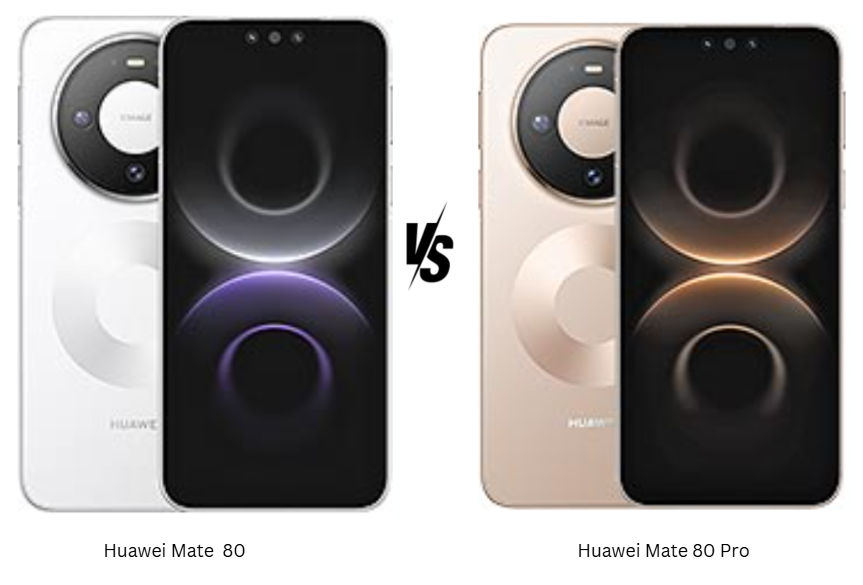
Both phones share the same overall design language with a premium glass-and-metal construction and strong durability ratings, giving them a flagship-grade presence. The Mate 80 feels slightly more straightforward, while the Mate 80 Pro leans toward a more refined aesthetic that subtly communicates its higher positioning. Small touches, like improved structural polish, make the Pro feel a bit more luxurious in daily handling. Both offer the same rugged water-resistance, but the Pro gives a sense of being engineered with more longevity in mind.
Display Quality
The displays are identical in size, refresh rate, and OLED quality, offering rich color output, smooth animations, and excellent brightness control thanks to LTPO and high-frequency PWM dimming. HDR Vivid enhances visual depth across both devices. The Pro’s advantage comes from slightly better tuning paired with its stronger GPU, resulting in steadier performance during heavy visual workloads and gaming.
Verdict
The Mate 80 already feels premium, but the Mate 80 Pro carries a more polished finish and delivers marginally smoother display performance. For buyers who value a refined aesthetic and optimized visual fluidity, the Pro stands out.
2. Specifications
Performance
The Mate 80 runs on the Kirin 9020, which handles everyday tasks with ease. However, the Mate 80 Pro’s Kirin 9030/9030 Pro chipset offers a clear performance leap, especially for demanding apps and extended gaming sessions. The stronger GPU also enhances rendering stability and overall responsiveness. Higher RAM configurations on the Pro reinforce its flagship identity, making it feel more effortless under load. The Mate 80 is fast, but the Pro simply has more headroom for future-proofing.
Battery and Charging
Both share the same large battery capacity, delivering long endurance for media, navigation, and mixed usage. The real difference appears in charging speeds. The Mate 80’s wired and wireless speeds are solid, but the Mate 80 Pro’s 100W wired and 80W wireless charging add significant convenience. Reverse charging is also far more powerful on the Pro, making it noticeably better for powering accessories on the go.
Verdict
The Mate 80 Pro clearly wins the performance and charging categories. Its faster chipset and much quicker charging create a more seamless daily experience.
3. Camera
Main and Secondary Lenses
Both devices share a similar 50MP primary camera with variable aperture, producing strong dynamic range and sharp detail. However, the Mate 80 Pro elevates the telephoto experience with a 48MP lens offering better zoom clarity and improved stabilization. Low-light telephoto shots especially benefit from this upgrade. The Pro’s ultrawide performance is similar to the Mate 80, but the overall photographic consistency feels more flagship-grade due to improved processing and color accuracy.
Selfie Camera
Both phones use a 13MP ultrawide selfie shooter with autofocus and 3D sensing for secure facial recognition. Photo and video quality are nearly identical, delivering crisp detail and stable footage. The Pro’s processing adds slightly better exposure control in tricky lighting, making selfies appear more balanced.
Verdict
The Mate 80 impresses, but the Mate 80 Pro’s stronger zoom lens and better tuning offer a more versatile and reliable camera system. Those who value detail-rich zoom shots will appreciate the Pro’s advantage.
4. Pricing
The Mate 80 is priced around $700, making it the more accessible option while still offering a flagship-tier design, strong performance, and excellent cameras. The Mate 80 Pro comes in at around $900, reflecting its upgraded chipset, enhanced charging speeds, and improved telephoto camera. The price jump is significant but justified for users who prioritize peak performance, faster power delivery, and more premium photo capabilities.
For value-focused buyers, the Mate 80 makes more sense, while tech-focused users may find the Pro’s enhancements worth the extra cost.
Disclaimer:
Prices are approximate and may vary based on country, region, and applicable taxes.
5. Conclusion
Both phones feature satellite messaging (China-only), advanced 3D face recognition, and premium OLED displays. The Mate 80 Pro adds faster wired and wireless charging, stronger reverse charging, and a more capable telephoto camera. The upgraded chipset also positions the Pro as a better long-term performer. Meanwhile, the Mate 80 retains most of the flagship experience at a more approachable price, making it a balanced choice for everyday users who want high-end features without the premium cost.
Verdict
Users seeking maximum power, better zoom photography, and rapid charging should gravitate toward the Mate 80 Pro. Those wanting a more value-driven flagship experience will find the Mate 80 hits the sweet spot between price and performance.
Read More: