

In 1991, Finnish student Linus Torvalds created the Linux kernel as a hobby to improve upon the Minix operating system. By merging his kernel with the GNU Project’s free software tools, a complete OS was born. In 1992, it transitioned to the GPL license, fueling global open-source collaboration. Today, Linux powers nearly all supercomputers, most web servers, a variety of home servers, and forms the foundation of Android, making it the world’s most dominant operating system. Here’s a small trip down memory lane for my fellow Linux enthusiasts:
Caldera OpenLinux (1997)
The distro that chose lawsuits over relevance and then acted surprised
For a brief moment in the late 1990s, Caldera OpenLinux seemed poised to be Linux’s corporate breakthrough. This was Linux packaged to soothe executives, complete with printed manuals and marketing language that promised predictability over passion. Caldera was not trying to win over hackers. It wanted Linux to behave, install cleanly, and stay out of the way in offices where experimentation was treated like a liability.
Technically, OpenLinux delivered. It was stable, conservative, and intentionally dull, which was exactly what its target audience wanted. The problem was not the software. The problem was what Caldera decided to do next.
After acquiring Unix assets from SCO, Caldera rebranded itself as The SCO Group and pivoted away from building Linux toward suing it.
The lawsuits failed, but by then Caldera’s reputation was beyond repair. OpenLinux did not die because it was bad. It died because its creator burned trust faster than it could ship updates, turning a once-promising distro into a case study in corporate self-sabotage.
Corel Linux (1999)
A rare moment of desktop sanity that corporate boredom killed
Corel Linux remains one of the strangest footnotes in Linux history, largely because it came from a company that actually understood desktop software. Built on Debian and centered on KDE, it aimed squarely at people who wanted Linux to function like a normal operating system rather than a character-building exercise.
The installer was approachable, the desktop made sense, and there was a visible effort to reduce friction without stripping away control. This was Linux that met users halfway rather than demanding initiation rites before granting access to basic functionality.
And then Corel lost interest.
Corel Linux did not fail because it lacked quality or vision. It failed because commitment ran out. In another timeline, it might have shaped desktop Linux before Ubuntu entered the chat. Instead, it became a reminder that good ideas still need stubborn advocates to survive.
Yellow Dog Linux (1999)
A distro whose fate depended on Apple and Sony PlayStation
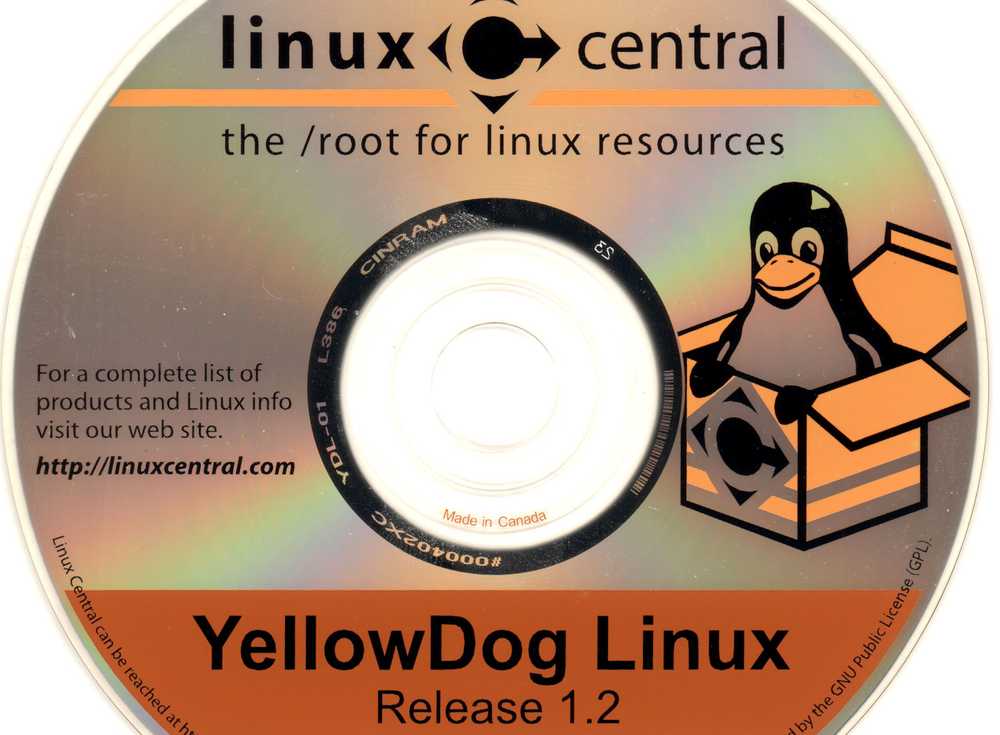
Yellow Dog Linux knew exactly what it was. It existed to make PowerPC hardware useful, particularly Apple’s G4 and G5 machines, and it did that job extremely well. Universities deployed it, research labs relied on it, and Mac owners who wanted Linux without compromise treated it as the obvious choice. It’s still completely possible to install Linux on a Mac.
It was also the unofficial Linux distro of the PlayStation 3 era, thanks to Sony’s short-lived but very real OtherOS support. When the PS3 exposed its PowerPC-based Cell processor to Linux, Yellow Dog Linux was uniquely prepared, having long focused on PowerPC hardware and already optimized for non-x86 systems.
This was a focus as a philosophy. Yellow Dog was optimized, stable, and unapologetically tied to a specific architecture. It did not chase trends or pretend it could be everything to everyone, and that clarity earned it loyalty.
Then Apple switched to Intel, and the floor disappeared. It simply outlived the hardware era it was built for, which is about as graceful an ending as a Linux distro ever gets.
CrunchBang (2008)
Minimalism before it became content

CrunchBang did not aim to reassure users. It assumed you wanted speed, clarity, and control, and that you were willing to meet it halfway. Built around Openbox with stripped-down defaults, it rejected visual excess in favor of responsiveness and keyboard-driven workflows that rewarded intent.
This was minimalism as discipline, not aesthetic. CrunchBang taught users to understand their systems, rely on structure instead of decoration, and stop expecting their desktop to entertain them. Long before minimalist Linux setups became social media currency, CrunchBang quietly shaped how people thought about efficiency.
Its ending is what cemented its legacy. The creator shut it down deliberately and cleanly, refusing to let it decay into obligation or limp along on community guilt. Forks appeared, as they always do, but CrunchBang itself remained complete.
It did not vanish because it failed. It ended because it had already made its point, which is a level of restraint most software never reaches.
Mandrake Linux (1998)
The distro that made Linux feel welcoming and pulled people in

Before Ubuntu became the default recommendation for beginners, Mandrake Linux quietly proved that Linux did not need to be hostile to be powerful. Built on Red Hat foundations, Mandrake focused on usability without condescension, delivering an installer that respected users’ time and a KDE desktop configured with care.
Hardware detection worked more often than it failed, defaults made sense, and the system encouraged exploration instead of punishing it. For many users, myself included, Mandrake was the first distro that made Linux feel like something worth committing to rather than merely sampling.

These 4 Linux distros are a bad idea — avoid them at all costs
Install them only if you hate yourself.
Linux does not forget; it just quietly recycles
Ancient Linux distros rarely disappear without leaving traces behind. Their names fade, and their websites rot, but their ideas resurface in newer projects that confidently claim to be innovative while borrowing heavily from the past. Linux history is not a graveyard. It is a recycling plant driven by burnout, funding shifts, and corporate attention spans. Remembering these distros is not nostalgia, but recognition of great ideas.
Every time a modern distro claims to have solved usability, minimalism, or focus for the first time, chances are someone already did it decades ago, argued about it on a mailing list, and then watched it disappear when priorities changed. Linux evolves by forgetting names, not ideas.
Why didn’t Slackware make the list? Because Slackware is very much alive and kicking, still, of course.


