

This year’s MWC was packed with announcements from all the big tech and hardware brands. As usual, the big-name devices received most of the attention. Foldables, concept devices, or the camera shootouts.
But every year, some of the most interesting things to come out of Barcelona end up buried under the noise. This year was no different. So here are ten announcements from MWC 2026 you may have missed.
Motorola × GrapheneOS
One of MWC’s most surprising announcements came from Motorola and GrapheneOS.
As you might know, GrapheneOS is the hardened, Google-free version of Android that has always run exclusively on Google Pixel phones. But this changed at MWC 2026.
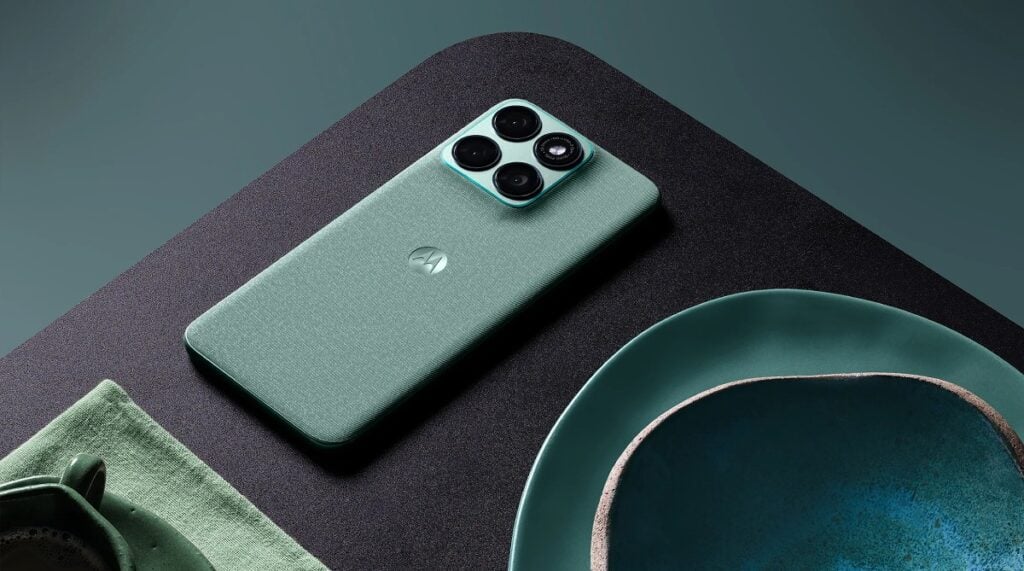
Motorola signed a long-term deal with the GrapheneOS Foundation to bring the OS to a future Motorola device. The first compatible hardware is expected to be based on the Signature, Razr Fold, or Razr Ultra lines, built around a future Qualcomm SPU, and is targeted for 2027.
But the deal goes beyond one device. Select GrapheneOS security features will roll out to existing Motorola phones, too. There is also a new “Private Image Data” tool in rollout that automatically strips location data and device metadata from every photo you take before it leaves your phone. Lenovo’s ThinkShield enterprise security stack ties the whole thing together.
Qualcomm Snapdragon X105
As always, Qualcomm had a busy MWC, and there were a lot of announcements from the chipmaker. One such is the new Snapdragon X105 modem designed for the upcoming wave of Android flagships.
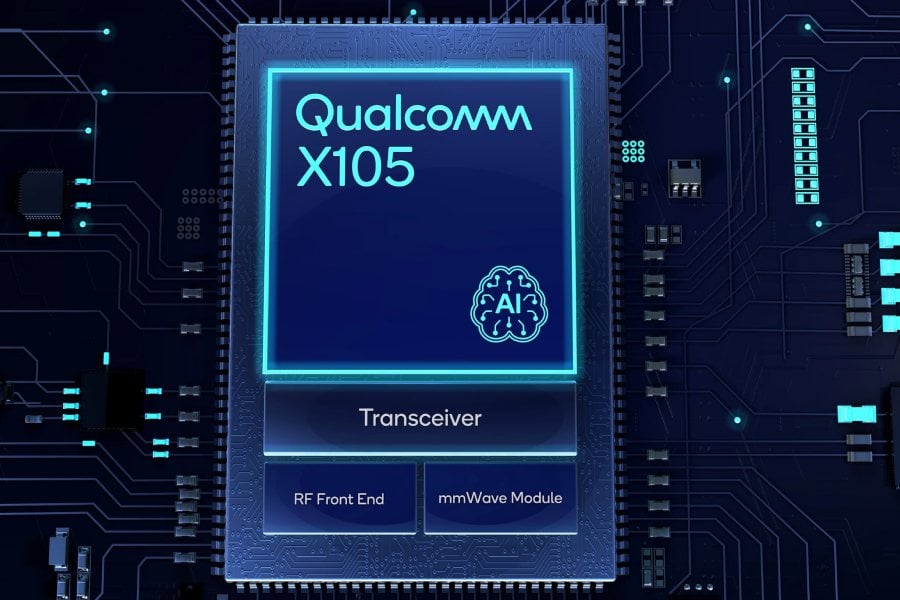
The X105 is 15 percent smaller than its predecessor, 30 percent more power-efficient, and has baked-in support for agentic AI tasks. Wi-Fi, Bluetooth, and GPS are bundled in the same package.
The headline feature, however, is satellite connectivity that now extends to emergency satellite video calls, not just text and voice. It can also predict RF conditions with the help of sensing software to try to maintain a stronger connection.
Lenovo AI Workmate
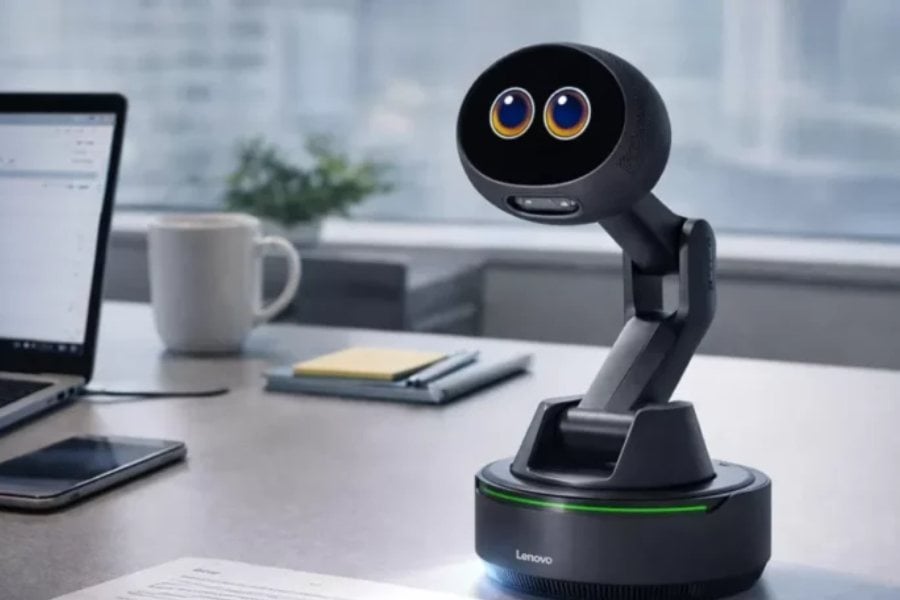
Lenovo brought a lot of concepts to Barcelona this year, but the AI Workmate might be one of the coolest among all.
It is a motorised desktop robot arm. It has sensors. It has a projector head. It points at your desk and displays interactive notifications, tools, and information directly onto the surface in front of you. It also has expressive animated eyes, which either sounds charming or unsettling, depending on your tolerance for personality in office hardware.
Lenovo also announced an AI Work Companion Concept to go along with the Workmate. Its a smart display and clock that syncs your tasks across devices and helps plan your day.
Lenovo has a decent track record of turning its MWC concepts into shipping products within a year or two. Here’s hoping that the AI Workmate shows up in a ThinkSmart lineup before 2028.
Starlink becomes “Starlink Mobile” and shows what V2 satellites actually mean
SpaceX gave a proper keynote at MWC this year, which is notable in itself. The headline out of it was the official rebrand of their direct-to-device service to “Starlink Mobile.”
The more interesting part was what they shared about the V2 constellation. The next generation of Starlink satellites targets up to 150 Mbit/s mobile data speeds using globally harmonised S-band spectrum. That is roughly a 100× improvement in data density over the current fleet.
Starlink Mobile already operates across 32 countries with 10 million monthly active users, and the company has set a target of 25 million users by the end of 2026.
Deutsche Telekom × Starlink
This one got a brief mention in a few places, but the full picture is worth spelling out.
Deutsche Telekom officially signed on at MWC as the first European carrier partner for Starlink’s V2 constellation.
The plan is to use satellite connectivity to plug the coverage gaps that tower infrastructure simply cannot solve. The service is targeting a 2028 launch in Germany. It is being designed so that existing Deutsche Telekom SIM cards work without any changes.
Vodafone × Amazon Kuiper
Amazon Kuiper is the counterpart of Starlink from Jeff Bezos, and it also made an announcement at MWC 2026.
It signed a partnership with Vodafone to use LEO satellites to deliver backhaul capacity to 4G and 5G base stations across Europe and Africa. With over 200 Kuiper satellites already in orbit, the network can already deliver up to 1 Gbps download and 400 Mbps upload to ground infrastructure.
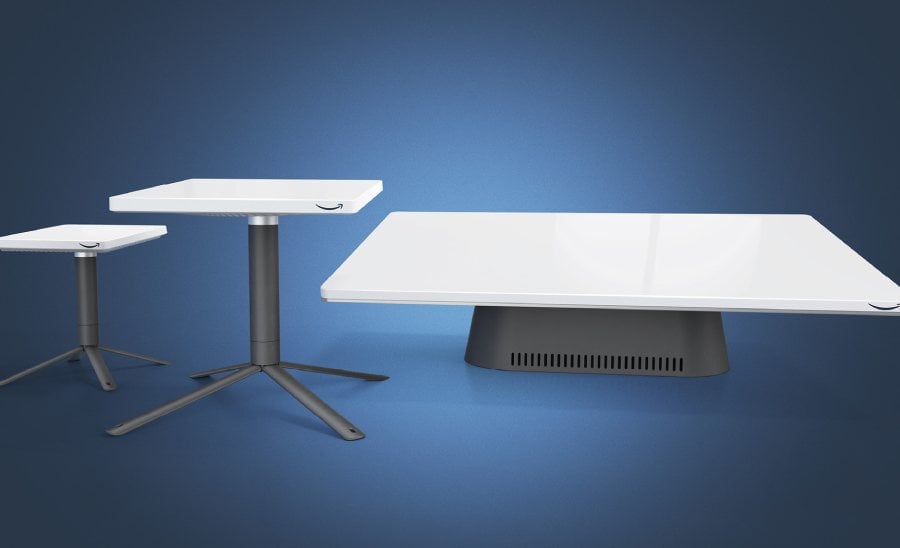
Rollout begins in Germany and other European markets in 2026, before expanding through Vodafone’s Vodacom subsidiary across Africa. The goal is to replace the expensive and slow-to-build fibre runs that currently hold back rural coverage.
AMD Ryzen AI 400 desktop
AMD chose MWC — a mobile-focused event — to launch its Ryzen AI 400 and Ryzen AI PRO 400 desktop processors.
These are the world’s first desktop chips to meet Microsoft’s Copilot+ PC requirements, meaning they can run the full suite of on-device AI features that Microsoft has been building since 2024.
They are built on Zen 5 architecture with AMD XDNA 2 NPUs that deliver up to 60 TOPS of AI compute. Copilot+ demands 40 TOPS of AI compute. The top configurations go up to 8 cores, a 5.1GHz boost clock, and Radeon 860M integrated graphics.
Dell, HP, and Lenovo have all confirmed systems using these chips, expected in Q2 2026.
Oukitel WP61 + RG14-P
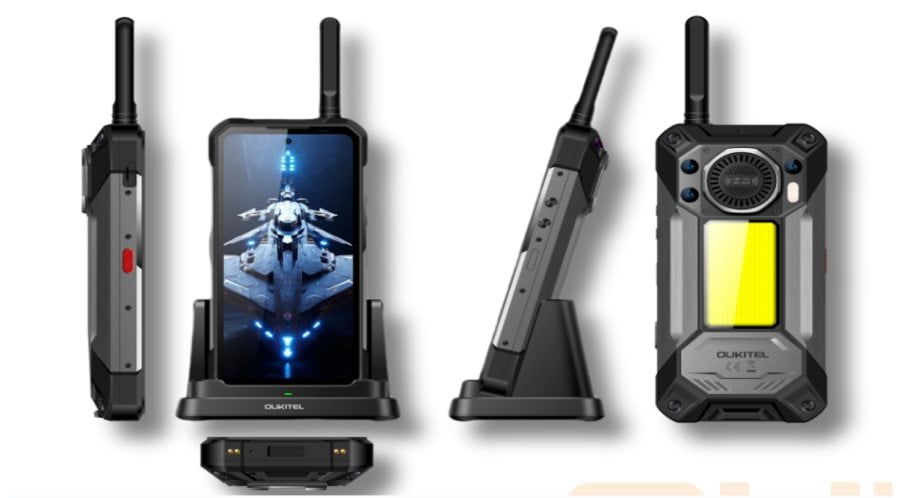
Oukitel is not a brand that gets much mainstream coverage, but their MWC lineup this year was genuinely remarkable, and the WP61 specifically is a first-of-its-kind device.
The WP61 is the world’s first smartphone to combine NTN two-way satellite connectivity, a thermal imaging camera, and a DMR digital walkie-talkie in a single chassis. The device is for emergency responders, construction teams, and field workers who currently carry multiple devices.
Alongside it, Oukitel announced RG14-P, a solar laptop powered by an Intel Core 7 150U processor, with a dual-battery system (3,000mAh internal plus a swappable 5,200mAh pack) and a 14.1-inch touchscreen. It is built for people who work where power outlets do not exist. The RT10 Pro industrial tablet, with a built-in projector and a 25,000mAh battery, rounds out the lineup.
AWS commits $33 billion to Spain: Europe’s AI infrastructure hub takes shape
Amazon’s Chief Global Affairs and Legal Affairs Officer, David Zapolsky, used MWC as the venue to announce that AWS is expanding its Spain infrastructure investment to $33 billion, an increase of $18 billion over a prior commitment.
The plans are specific and large. Amazon plans to build seven new solar facilities, a new manufacturing plant in Aragon that will serve as the hub for European server and server rack production.
GSMA × ESA
The final story is also the most forward-looking one.
At MWC, the GSMA and the European Space Agency jointly announced up to €100 million in new funding to accelerate convergence between space infrastructure and terrestrial mobile networks. The goal is to fund projects that combine LEO satellite capacity with 5G and 6G ground systems.
This kind of institutional backing makes satellite-mobile convergence happen on a faster timeline than the market would manage on its own. The immediate applications are emergency connectivity and rural coverage.
For more daily updates, please visit our News Section.
Stay ahead in tech! Join our Telegram community and sign up for our daily newsletter of top stories! 💡


