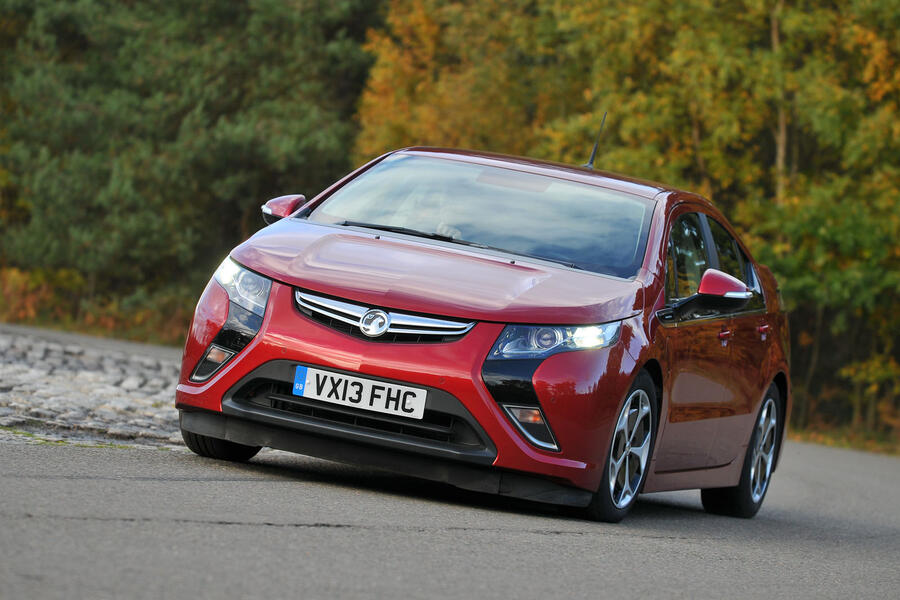
Less than four years later the much-altered Volt had entered production, the team putting into production led by the inspirational Frank Weber from Opel, the task of sourcing a reliable battery pack falling to Denise Gray, GM’s head of rechargeable energy systems.
Your columnist vividly remembers being told by her, at an early Volt press briefing, that GM did not yet know whether it would be possible to engineer the battery pack necessary to make the Volt work. I was amazed that anyone would admit to such jeopardy in such a high profile project. But that jeopardy was genuinely there, even if Gray was perhaps predictably confident that that the goal would be met. Other goals were met too, including the start of production in 2010.
All the way through the development GM would regularly update journalists on the project, explaining in increasing detail how the car worked, and the thinking behind it. And also the fact that in Europe, not only would there be a Chevrolet Volt but Opel and Vauxhall Ampera too, these European versions featuring distinct styling variations.
There were so many presentations that I doubt the ratio of press briefings to units actually sold has ever been surpassed. Regrettably that’s not merely because there were so many briefings, but because in Europe, so few of these cars found buyers.
It wasn’t that the Volt and Ampera duo didn’t deliver on the road. Autocar’s testers Ampera managed 33.4 miles of electric range, 60mph in 10.1sec and estimated a £1 cost to recharge the battery. It was easy to drive, quiet and comfortable enough, even if its handling and ride were nothing remarkable.