

Speaking of which, the XJs now await. They are from the S3 E-Type’s 1970s era and speak a similar language – only more lavishly, mellifluously and effortlessly still. At its launch in 1972, the XJ12 was the only mass-produced 12-cylinder saloon in the world. The Lotus Carlton of its day. Well, it doesn’t have bucket seats or launch control.
But there’s a sense of cocooning intimacy about its driving position, with the relatively close windscreen and pillars, and a big, elegant, close-set steering wheel. Importantly, it doesn’t feel huge, inside or out. Snick down to ‘D’ on the auto gearbox’s drive selector lever and you almost hover your way forwards.
The V12 does accessible torque in a woofly, velvety, super-inviting fashion. The way it makes rapidly building forward impetus without apparently needing lots of revs or a big stab of throttle, especially at roll-on motorway pace, somehow makes it seem urgent and unhurried at the same time. It’s this, surely, that Jaguar is referring to when it talks about its trademark ‘power in reserve’.
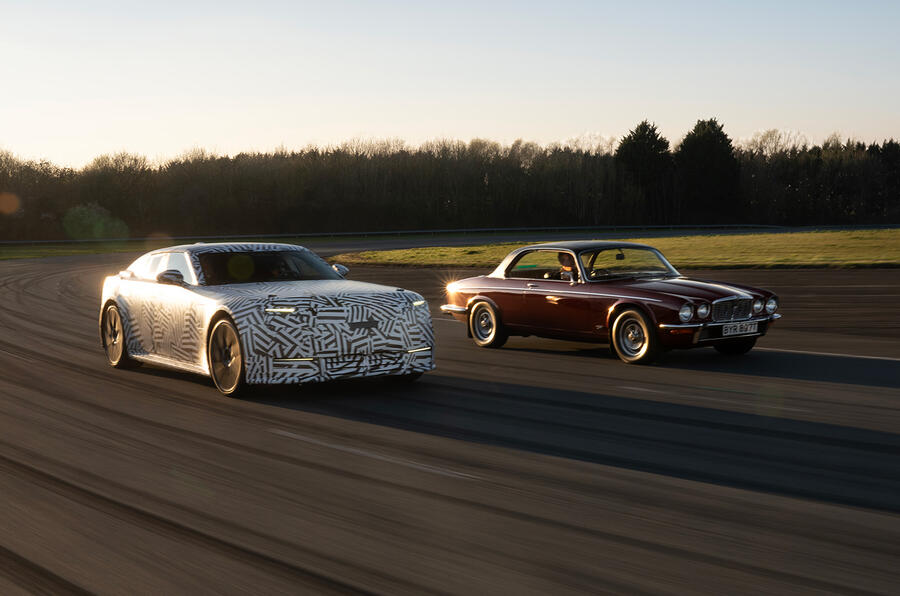
On ride and handling, a similar sense of effortless poise characterises the way both XJs behave. There’s a suppleness, fluency and absorbency to the ride of both that seems to let the axles work independently of the body, like the imaginary swan’s submerged legs. You expect that bad cornering manners must come as a consequence, but they don’t. Both the XJ and XJ-C roll a bit as they turn in, yet they do it so intuitively, in perfect harmony with the rate of your opposing steering input. Then, they settle on their loaded wheels, quickly come to heel on your preferred line, take a gently positive posture and can be driven to the exit with plenty of poise and pace.


