

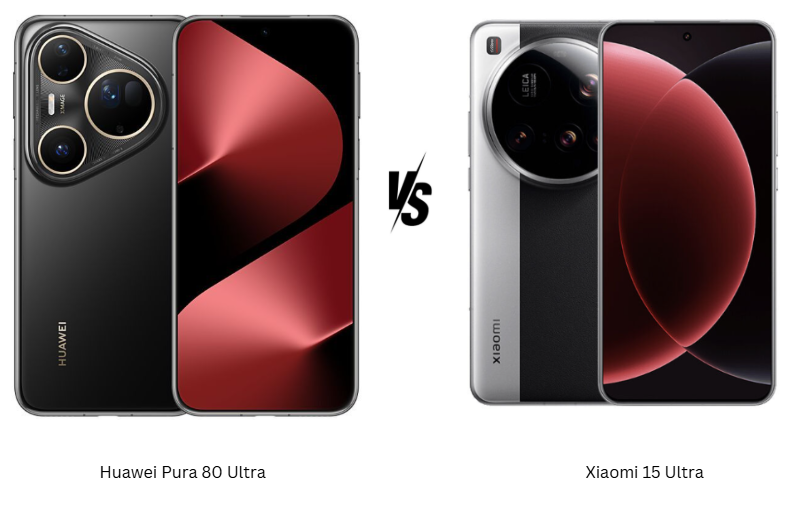
Huawei Pura 80 Ultra and Xiaomi 15 Ultra stand as two of the most advanced smartphones in 2025, pushing boundaries in design, performance, and imaging. Both devices target premium users seeking cutting-edge features, but their approach differs. This comparison highlights their upgrades and differences to help determine which flagship is more compelling for power users, photography enthusiasts, and future-ready buyers.
1. Design and display
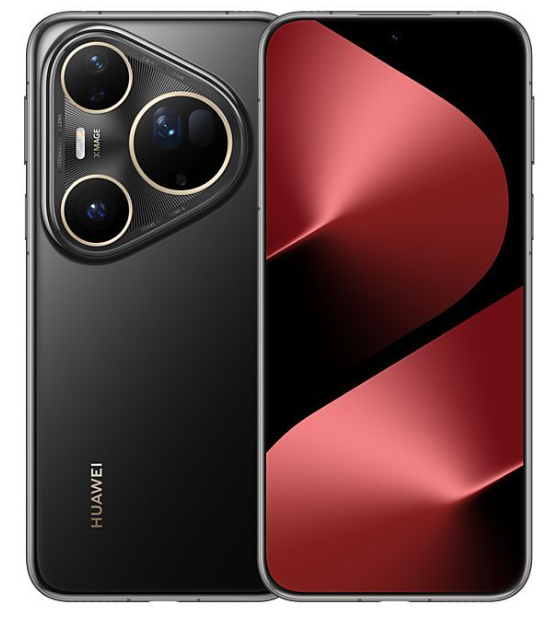
Huawei Pura 80 Ultra
Build and Feel:
Huawei Pura 80 Ultra emphasizes durability with glass panels, an aluminum frame, and stronger IP68/IP69 resistance, making it more resistant to high-pressure water jets than the Xiaomi 15 Ultra. Meanwhile, Xiaomi offers more material options, including eco-leather and aerospace-grade glass fiber, giving users flexibility in style. Xiaomi also keeps the frame slightly sleeker despite a higher thickness. Huawei’s edge lies in ruggedness, while Xiaomi scores in premium finishes and variety.
Verdict: Huawei is tougher, but Xiaomi offers more premium design choices.
Display Quality:
Huawei brings a 6.8-inch LTPO OLED with HDR Vivid, 1440Hz PWM dimming, and 3000 nits peak brightness, optimized for eye comfort and outdoor visibility. Xiaomi’s 6.73-inch AMOLED surpasses in sharpness with 522 ppi, Dolby Vision, HDR10+, HDR Vivid, and even brighter 3200 nits peak output. The higher resolution and Dolby Vision support make Xiaomi superior for content consumption, while Huawei favors smoother eye protection.
Verdict: Xiaomi wins for sharper visuals and higher brightness, though Huawei is better for eye comfort.
Verdict:
Huawei shines with its robust build and eye-friendly display, but Xiaomi’s superior resolution, peak brightness, and material versatility make it more appealing for display-focused and style-conscious users. Xiaomi 15 Ultra edges ahead in overall design and display experience.
2. Specifications
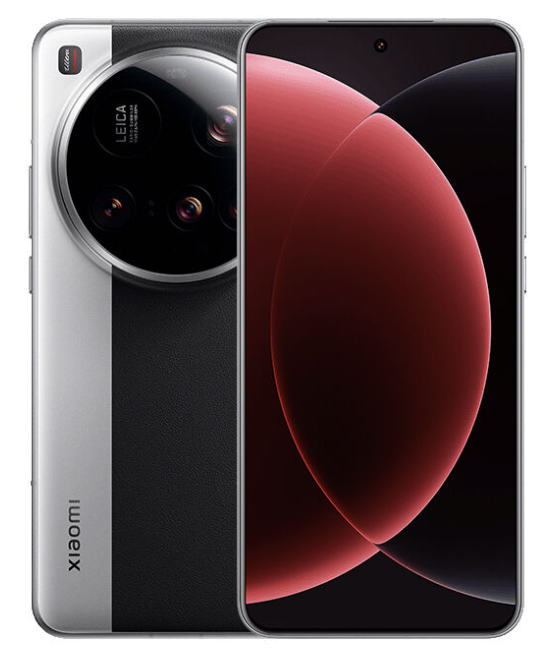
Xiaomi 15 Ultra
Performance:
Huawei’s Kirin 9020 uses a 7nm process with the Maleoon 920 GPU, which is powerful but falls behind the Snapdragon 8 Elite inside Xiaomi. The 8 Elite’s 3nm process, higher clock speeds, and Adreno 830 GPU deliver better gaming and AI performance, alongside more efficient thermal management. Xiaomi also benefits from UFS 4.1 storage for faster data speeds. Huawei’s hardware is competitive, but Xiaomi clearly dominates in raw performance and future-proofing.
Verdict: Xiaomi 15 Ultra is superior for power users and gamers.
Battery and Charging:
Huawei equips up to 5700 mAh in China and 5170 mAh globally, with 100W wired and 80W wireless charging. Xiaomi offers a larger 6000 mAh in China (5410 mAh global), paired with 90W wired and 80W wireless charging. Both provide reverse charging, but Huawei includes faster 20W reverse wired support. In real usage, Xiaomi offers slightly longer endurance, while Huawei recharges a bit quicker with its 100W wired standard.
Verdict: Huawei wins for charging flexibility, while Xiaomi takes the edge in battery life.
Verdict:
Huawei delivers excellent charging versatility and respectable endurance, but Xiaomi’s Snapdragon 8 Elite platform and larger battery make it the stronger performer overall. Xiaomi leads in specifications and efficiency.
3. Camera
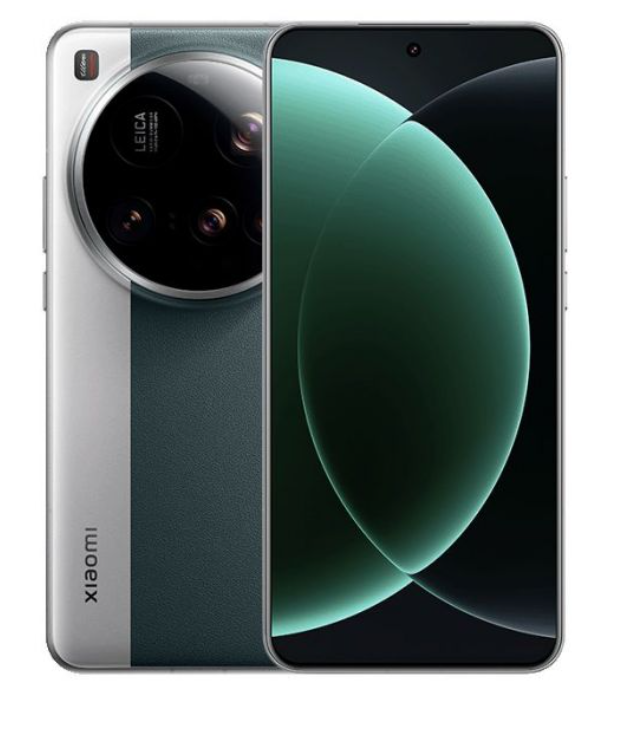
Xiaomi 15 Ultra
Main and Secondary Lenses:
Huawei offers a quad setup with dual periscope telephotos (3.7x and 9.4x), a 50MP main sensor with a 1-inch type sensor, and a 40MP ultrawide. This combination gives strong versatility for long-distance zooming. Xiaomi answers with a Leica-branded system: 50MP main 1-inch sensor, 50MP 3x telephoto, a massive 200MP periscope with 4.3x zoom, and 50MP ultrawide. Xiaomi also adds a TOF 3D depth sensor and supports 8K video with Dolby Vision HDR, which is missing on Huawei. While Huawei’s dual telephoto setup is unique, Xiaomi’s 200MP periscope and advanced video recording make it more powerful for creators.
Verdict: Xiaomi offers a more advanced imaging system overall.
Selfie Camera:
Huawei includes a 13MP ultrawide with 4K recording at up to 240fps slow motion, appealing to vloggers who want versatility. Xiaomi’s 32MP sensor captures higher-resolution selfies and supports 4K recording with gyro-EIS, producing sharper detail. Huawei’s ultrawide advantage benefits group shots, while Xiaomi prioritizes crisp image quality.
Verdict: Xiaomi’s 32MP front camera provides sharper selfies, though Huawei wins in flexibility.
Verdict:
Huawei’s dual telephoto zoom system is impressive, but Xiaomi’s 200MP periscope, Leica tuning, and advanced video features set a higher standard for professional-grade photography and videography. Xiaomi 15 Ultra dominates in camera innovation.
4. Pricing
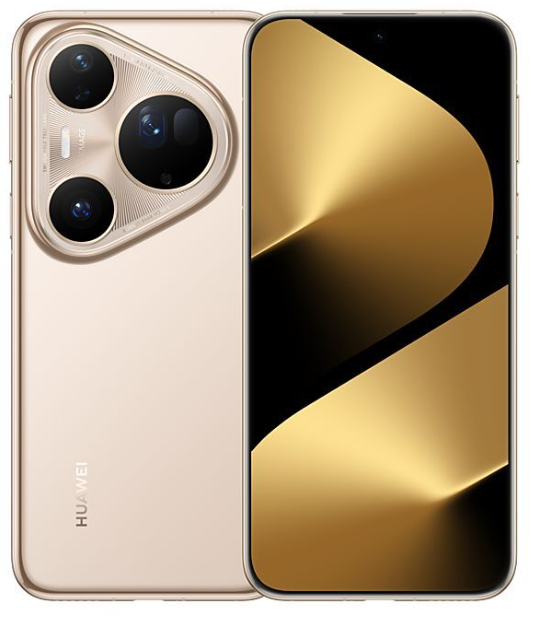
Huawei Pura 80 Ultra
Both the Huawei Pura 80 Ultra and Xiaomi 15 Ultra are priced around $1500, positioning them directly against each other in the ultra-premium market. Considering Xiaomi delivers a Snapdragon 8 Elite processor, a sharper display, and a more versatile camera setup at the same cost, it offers greater value. Huawei, however, appeals to those prioritizing durability, satellite connectivity (in China), and unique dual telephoto zooming.
Verdict: At $1500, Xiaomi 15 Ultra provides stronger overall value for most users.
5. Conclusion
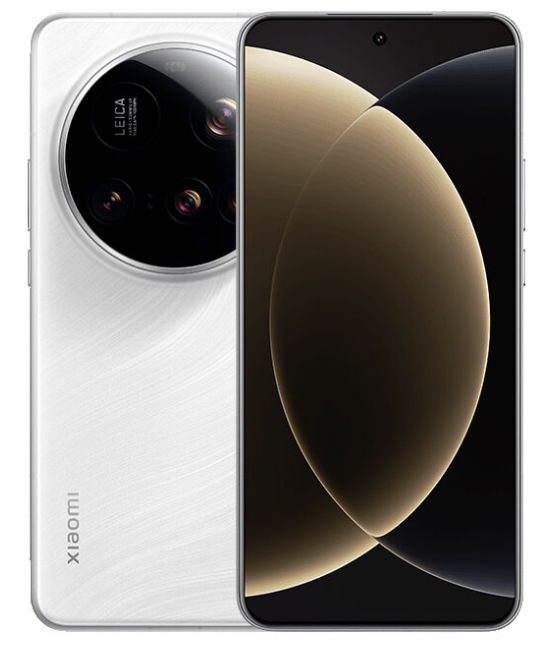
Xiaomi 15 Ultra
Huawei distinguishes itself with IP69 water resistance, dual telephoto periscopes, and faster reverse charging, making it attractive to those who prioritize durability and zoom flexibility. Xiaomi counters with Snapdragon 8 Elite power, Dolby Vision HDR, Leica-tuned lenses, 200MP periscope, and two-way satellite communication. Its inclusion of Dolby Vision 8K video recording and optional filter ring system makes it more creator-focused.
Verdict:
Huawei Pura 80 Ultra is best suited for users needing extreme durability, advanced zoom range, and reliable charging versatility. Xiaomi 15 Ultra is the stronger all-rounder, excelling in performance, display quality, and professional-grade imaging.
For most flagship buyers, the Xiaomi 15 Ultra is the more compelling choice, while Huawei appeals to niche users who value ruggedness and a unique telephoto design.
Read More:


