

The global humanoid robot market moved into a clear expansion phase in 2025, according to a new industry assessment by Omdia. Worldwide shipments reached around 13,000 units during the year, reflecting growing commercial demand beyond research labs and pilot projects. Omdia expects this momentum to accelerate sharply over the next decade, with annual shipments projected to climb to nearly 2.6 million units by 2035 as robots become more capable and cost-effective.

Among all manufacturers, AGIBOT emerged as the market leader in 2025. The company shipped more than 5,100 humanoid robots during the year, securing roughly 39% of the global market. This placed AGIBOT at the top in both shipment volume and overall market share, ahead of competitors such as Unitree, UBTech, and several emerging robotics firms.
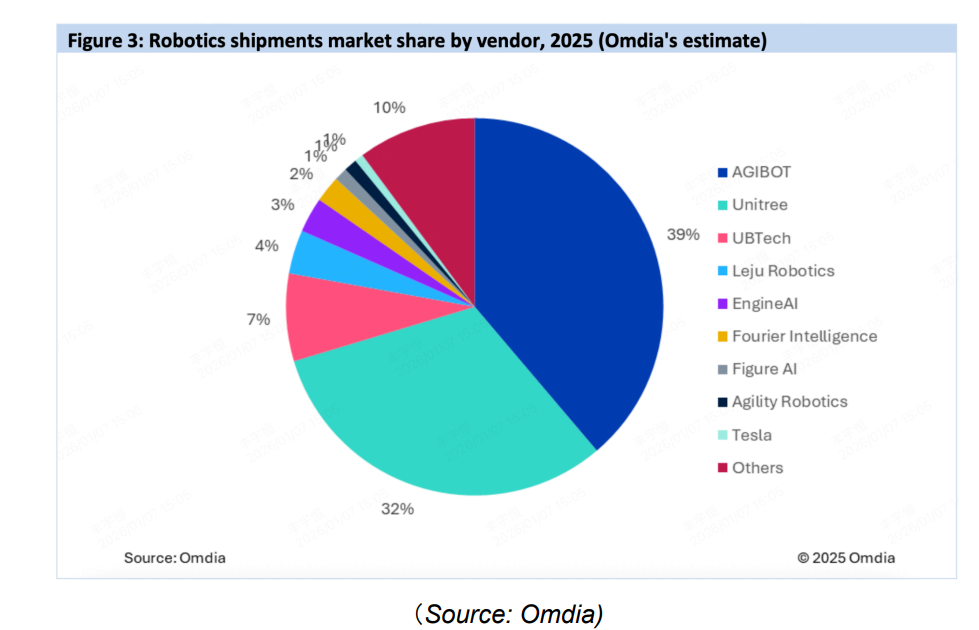
Market share estimates show Unitree holding the second position with around 32%, while the remaining share is spread across companies, including UBTech, Leju Robotics, EngineAI, and others. Smaller contributions also came from well-known names such as Tesla and Agility Robotics, highlighting a crowded but rapidly evolving competitive landscape.
AGIBOT’s product lineup spans full-size humanoid robots, smaller half-size models, and wheeled embodied intelligent robots. These systems are already being used in practical settings such as hospitality, industrial manufacturing, logistics operations, security patrols, and data collection for AI training. Education and scientific research are also emerging as important use cases.
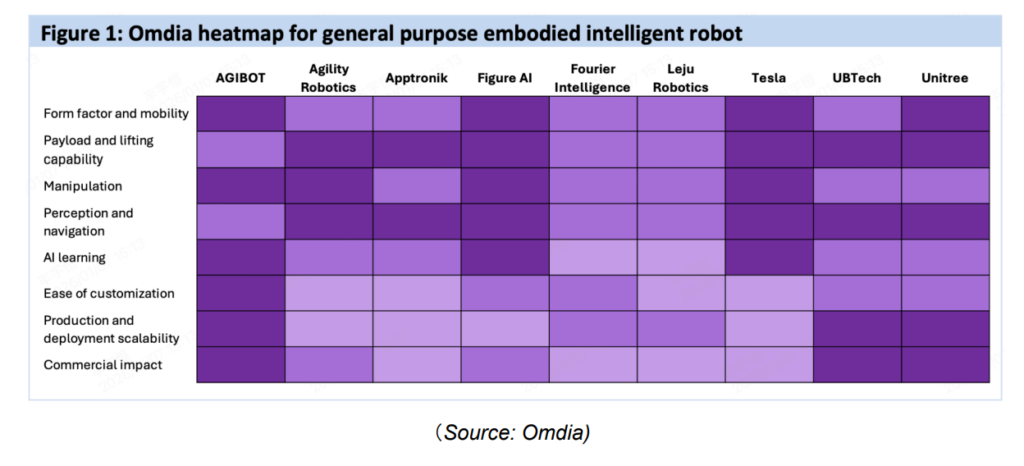
In Omdia’s technical evaluation of general-purpose embodied robots, AGIBOT received advanced ratings across most key categories, including mobility, manipulation, AI learning, and scalability. Based on these results, Omdia places AGIBOT in the global first tier of humanoid robot developers, alongside companies like Unitree and Tesla, all of which are pushing toward more adaptable, general-purpose robotic intelligence.
Read More:


.jpg?ssl=1 "The Best Time to Drink Coffee for Productivity (and When Not To)")


