

This incentivises manufacturers to drop powertrains that do not feature electrical assistance, such as the current Clio’s TCe 90 turbocharged three-pot, due to their higher carbon emissions.
For reference, the TCe 90 puts out 120g/km, whereas the E-Tech is rated at 96g/km, a reduction of 20%.
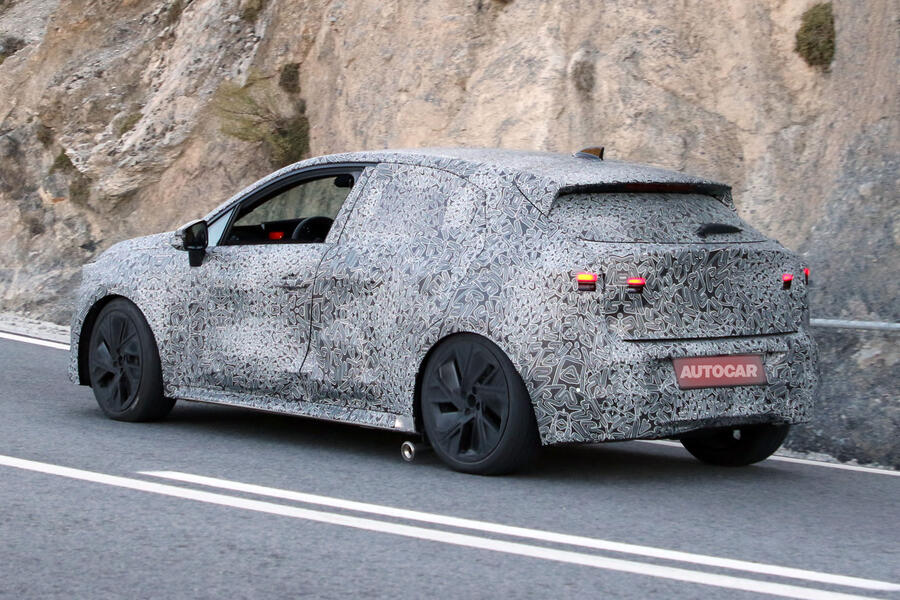
Axing the pure-petrol engine would therefore provide a significant cut to Renault’s fleet average – crucial, given the EU’s fleet emissions targets will only become stricter in the coming years, hitting 49.5g/km in 2030.
Autocar understands that Renault has now decided not to offer the new Clio with a battery-electric powertrain, however.
It is therefore possible that it may not be offered in the UK, due to the new Zero-Emission Vehicle (ZEV) mandate.
This requires brands to sell an increasing proportion of electric cars, starting at 24% of total sales this year and ramping up to 80% in 2030.
Limiting the number of combustion-engined cars that manufacturers can sell means they will prioritise their most profitable models. Renault will most likely limit – and could even end – Clio sales in the UK because the closely related Captur crossover makes more money from an equivalent number of sales.


