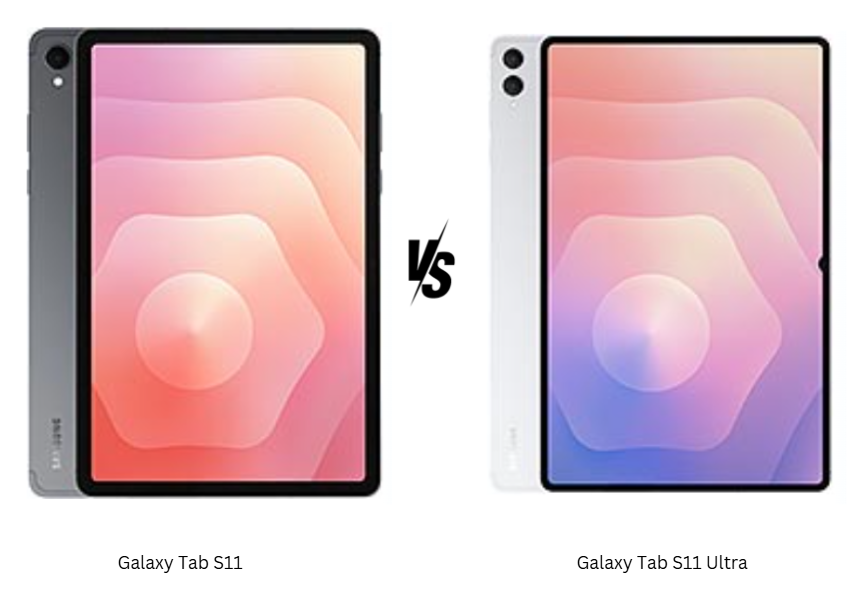
1. Design and Display
Build Quality
Both tablets share the same aluminum body, IP68 rating, and slim profiles, but the Ultra feels more premium due to its massive footprint and thinner 5.1 mm frame. The standard S11 is easier to hold, while the Ultra leans toward laptop-class usage because of its larger surface area.
Display & Multimedia
The biggest upgrade is the 14.6-inch Dynamic AMOLED 2X panel on the Ultra. It offers a more immersive canvas for movies, art, and multitasking. Although both use the same peak brightness and HDR10+ support, the Ultra’s size gives it a clear edge for productivity and content consumption. The S11’s 11-inch display is sharper at a higher pixel density, but the Ultra provides a more cinematic and workstation-friendly experience.
Verdict
The S11 is practical and compact, but the Ultra stands out with a superior multimedia and workstation display, making it the stronger choice for creators, designers, and power users.
2. Performance and Software
Processor & UI Smoothness
Both tablets run the Dimensity 9400+, offering flagship-level speed, lag-free navigation, and fast app launches. The Ultra pulls slightly ahead in sustained workloads thanks to its better thermal distribution across a larger body and the option for 16GB RAM, which helps keep more apps alive in the background.
Productivity & Multitasking
Samsung DeX runs smoothly on both, but the Ultra’s huge 14.6-inch screen dramatically boosts split-screen usability. Writing, spreadsheet editing, and note-taking feel closer to laptop territory. The S11 handles everyday work easily, yet the Ultra’s larger display + higher RAM variant makes it better suited for creative suites, coding, and multitasking-heavy users.
Verdict
Performance is similar, but the Ultra’s 16GB RAM option and laptop-like workspace give it the productivity crown, especially for professionals and creators.
3. Battery and Accessories
Battery Life
The Ultra delivers a big upgrade with its 11,600 mAh battery, offering noticeably longer endurance for streaming, editing, and multitasking. The S11’s 8,400 mAh cell is solid but lasts shorter under heavy workloads, especially when using DeX or high brightness. Charging speed remains the same on both (45W).
Stylus, Keyboard & Ecosystem
Both support the S-Pen and Samsung’s accessory ecosystem. However, the Ultra benefits more from these add-ons because its large screen makes S-Pen drawing more natural and keyboard use more laptop-like. The bigger canvas improves handwriting accuracy and gives creators more space to work.
Verdict
While both share the same accessory support, the Ultra offers significantly longer battery life and a better stylus/keyboard experience, reinforcing its productivity focus.
4. Camera & Media
Rear and Front Camera
The S11 includes a single 13MP rear camera, while the Ultra introduces a dual setup with an 8MP ultrawide lens, making it more versatile for document capture and creative shots. Both share a 12MP ultrawide selfie camera, though the Ultra’s larger display makes video calls more comfortable.
Video & Audio Quality
Video capabilities remain similar (4K/30), but the Ultra’s wider rear setup offers more framing flexibility. Audio quality is excellent on both, but the Ultra’s larger chamber speakers produce deeper sound and better spatial output during movies or gaming.
Verdict
The Ultra wins with an extra ultrawide camera and richer audio, giving it stronger media creation and entertainment potential.
5. Pricing
The Tab S11 starts around $700, while the Ultra begins near $1000. The price jump is justified mainly by the massive 14.6-inch display, bigger battery, extra camera, and higher RAM variant. Buyers focused on portability should stick with the S11, while users replacing a laptop or working creatively get far better value from the Ultra.
Disclaimer:
Prices are approximate and may vary based on country, region, and applicable taxes.
6. Conclusion
The Ultra stands out by offering:
- 14.6-inch AMOLED workstation display
- Dual rear cameras
- 16GB RAM option
- Massive 11,600 mAh battery
- Better speakers and more immersive multimedia
- The S11 remains a compact and powerful tablet, but lacks the dramatic upgrades that make the Ultra feel premium and productivity-ready.
Verdict
Go for the Galaxy Tab S11 if you prefer portability, a lower price, and solid all-around performance.
Choose the Galaxy Tab S11 Ultra if you want a laptop-like experience with better media quality, longer battery life, and enhanced creative capabilities. Its upgrades make a noticeable difference in daily use, and if budget isn’t a concern, the S11 Ultra delivers the most complete and premium tablet experience.
Read More: