

Japan is turning to cutting-edge drone technology to protect its poultry farms from devastating bird flu outbreaks. In one of the most ambitious biosecurity moves in recent years, authorities have deployed laser-equipped drones to scare away virus-carrying wild birds before they can spread the disease.
A Serious Threat to Poultry Farms
Avian influenza is one of the biggest threats to the global poultry industry. A single outbreak can wipe out entire farms and lead to massive economic losses. Earlier this year, a major outbreak in Chiba Prefecture forced the culling of more than 3.3 million birds in just two months. Nationwide, around 4.6 million poultry were lost.
The main culprits are wild birds, especially crows, pigeons, and migratory waterfowl, that can carry the virus without showing symptoms. They spread it through droppings, saliva, or nasal fluids. Once the virus reaches domestic flocks, it can spread rapidly, forcing farms to take drastic measures like culling.
NTT Leads the Innovation
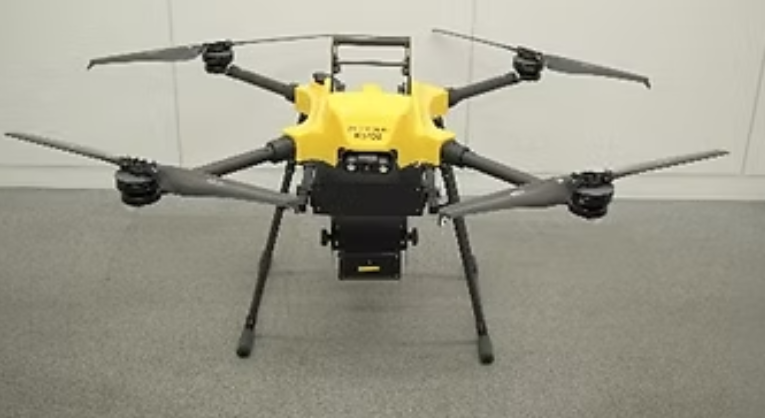
To prevent such disasters, Nippon Telegraph and Telephone (NTT) has developed a new drone-based solution. In collaboration with NTT e-Drone Technology, NTT East, and the Chiba Prefectural Government, the company has created an autonomous bird-repellent system using its BB102 drone model.
Unlike typical drones used for spraying or mapping, these drones patrol poultry farms day and night. They are equipped with red and green laser projectors that flash intermittently, an approach designed to make birds uncomfortable without harming them.
How the Laser Drones Work
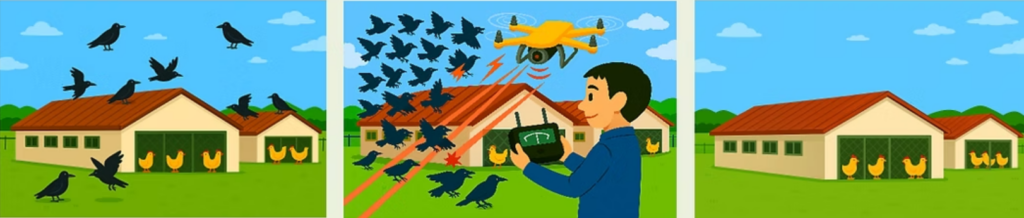
The BB102 drone flies above poultry farms, scanning for wild birds. When birds are detected, it flashes multiple red and green laser beams to drive them away. These colors have been scientifically proven to deter animals, including pigeons, crows, and deer.
The flashing pattern plays a crucial role. Continuous light can lose its effect over time as birds adapt, but intermittent flashes prevent this. In short, the drones build an “aerial protective net,” keeping wild birds and the virus they may carry at a distance.
A Clean, Quiet, and Smart Solution
Unlike gas cannons or netting, the drone system is fully automated and silent. It works in all weather conditions and doesn’t rely on chemicals, making it an environmentally friendly alternative. This shift also reduces dependence on reactive measures like mass culling, helping farmers protect both their flocks and their livelihoods.
| Traditional Methods | Limitations | BB102 Drone Advantages |
| Gas cannons | Loud and requires a manual reset | Silent and automated |
| Nets | Labor-intensive and limited coverage | Wide aerial coverage |
| Chemicals/pesticides | Polluting and costly | Eco-friendly deterrence |
Backed by Science and Policy
Studies have linked bird flu outbreaks in Japan to migratory bird movements in late winter and spring. By scaring away potential carriers before they land, the drones address the problem at its source.
The program is supported by the Japanese government, which offers subsidies to encourage farmers to adopt this technology. It also fits into the country’s broader strategy of precision agriculture and AI-based farm management.
A Model for the World
Laser deterrent systems are already used at airports in Europe and North America to keep birds away from runways. Japan’s innovation goes a step further by combining mobility, automation, and farm-level integration.
Experts believe that if successful, countries like the Netherlands, South Korea, and the United States could adopt similar solutions. This could mark a global shift from reacting to outbreaks through culling to preventing them through smart deterrence.
A New Era of Farm Protection
The BB102 laser drones are more than just a technological upgrade; they represent a smarter, cleaner way to protect food supply chains. By keeping wild birds at bay without harming them, Japan is setting a new standard in farm biosecurity.
With this innovation, poultry farmers can focus on raising healthy flocks while reducing the risk of another devastating bird flu season.
Read More;


