

With an eye on new dials that would soon be introduced in the Lupo, Ostmann was waved off by the car’s project leader “with an impassioned plea for leniency on the gearbox, especially in the lower ratios”.
At this point, the transmission was a borrowed Audi five-speed automatic “pushed nearly to breaking point”. The Veyron Grand Sport (Bugatti’s term for roadsters) that this VW W12 would eventually become would famously use a vast, state-of-the-art dual-clutch unit painstakingly developed by Ricardo.
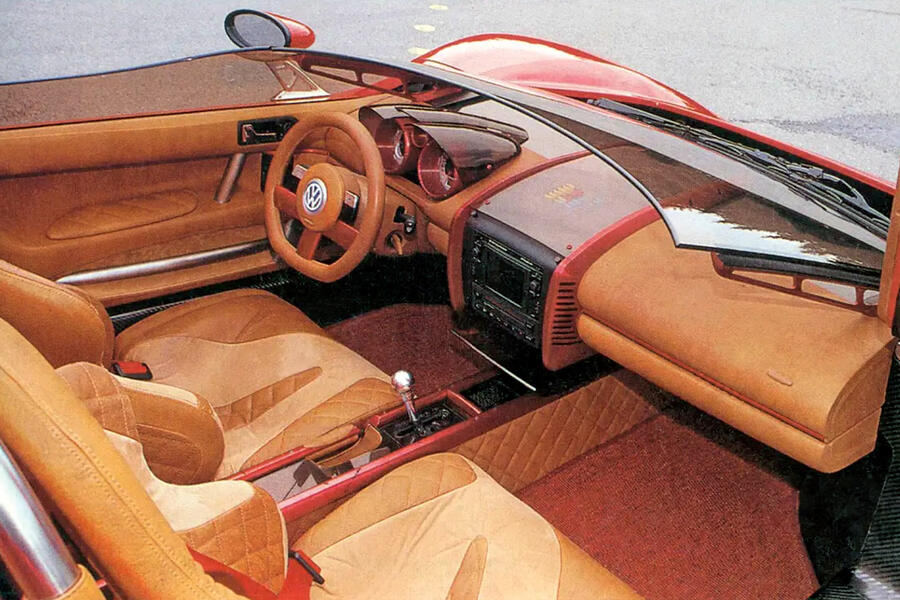
At Ostmann’s feet, floor-hinged Tilton pedals; ahead of him, inboard suspension at the base of a wraparound screen not tall enough to protect our man’s forehead from the icy wind. Behind him, the mighty W12.
The car was commendably stable on straights but prone to wandering in bends. “In need of further development” was the verdict. To the extent that it ever took place, that further development never came to fruition, even if VW was still touting the W12 Roadster as a real production proposition early in 2001, and at a cost of less than £100,000 – £190,000 or so today.
By the end of that year, it was looking more unlikely, not least because VW already had Lamborghini to purvey mainstream supercars. Piëch’s desire to develop a truly extraordinary performance car that pushed the envelope in every conceivable way had found a sweeter vessel in the nascent Bugatti project.


